GLAGOLITSA | PROJECT DEDICATED TO 24 MAY
2025.05.23
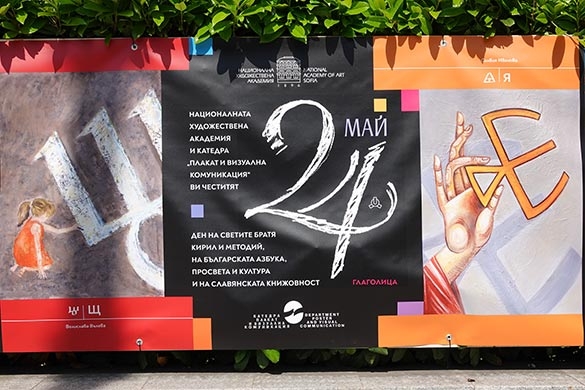
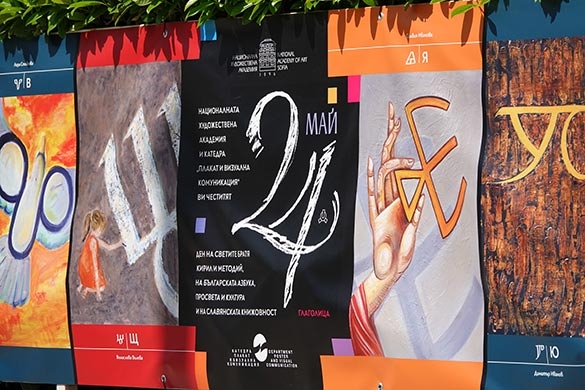
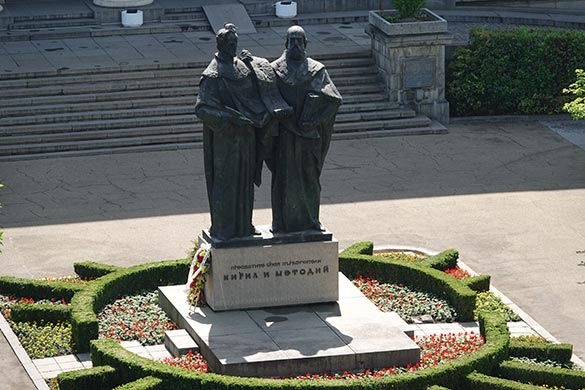
DAY OF THE HOLY BROTHERS CYRIL AND METHODIUS, BULGARIAN ALPHABET, EDUCATION AND CULTURE, AND SLAVONIC LITERATURE*
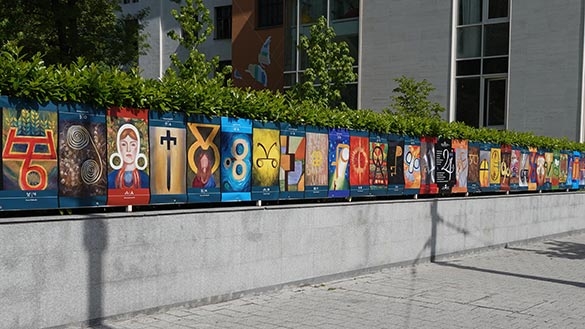
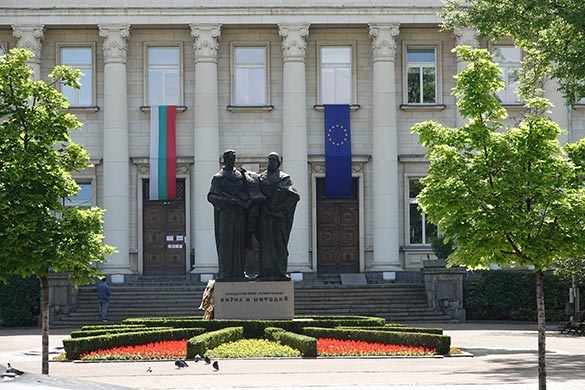
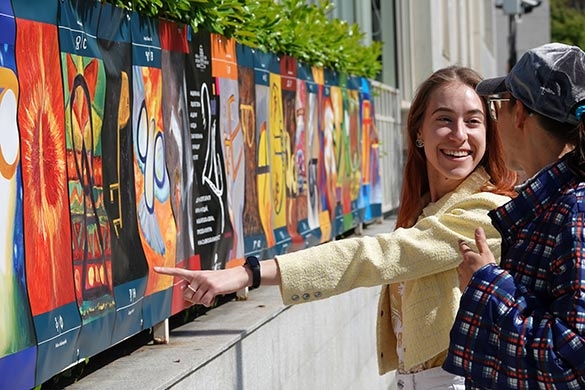
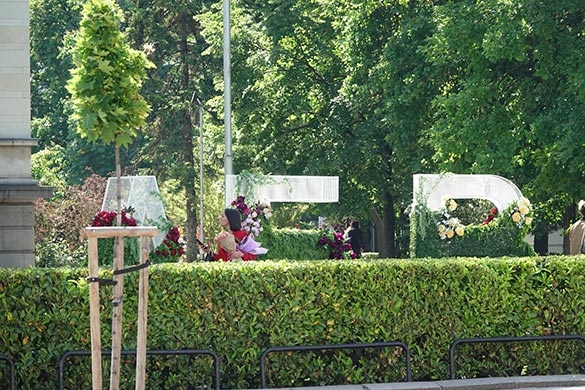
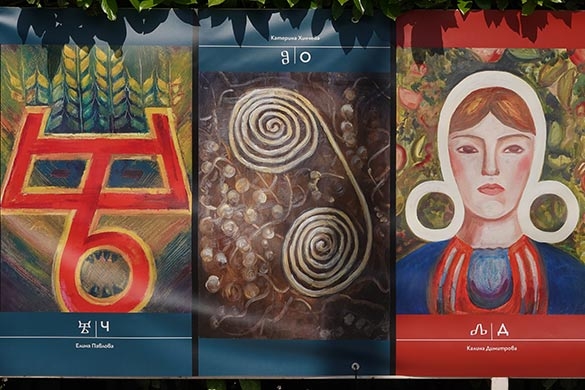
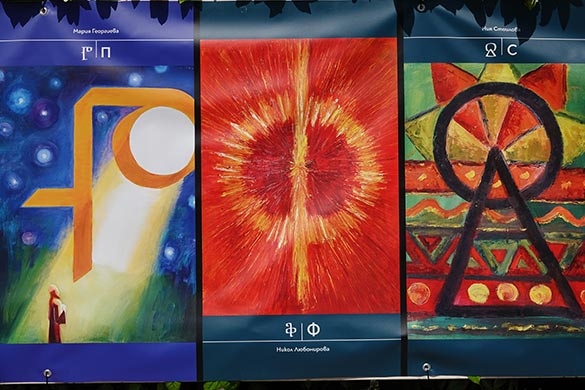
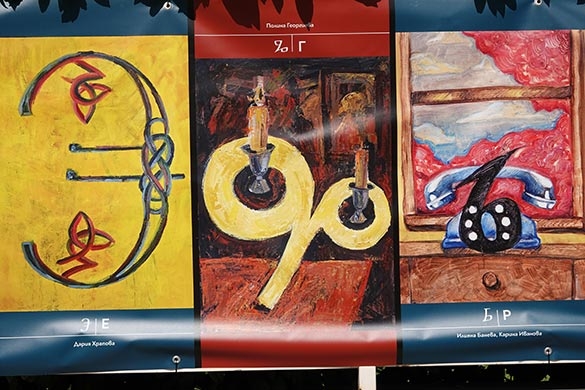
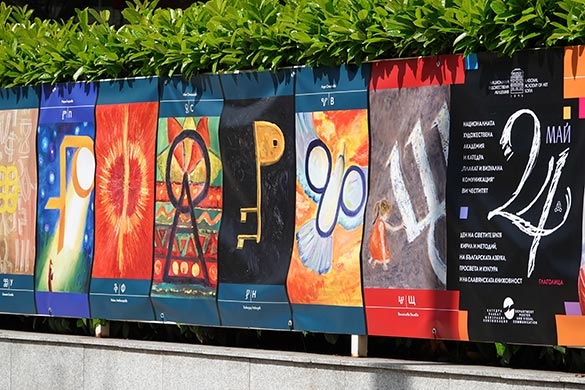
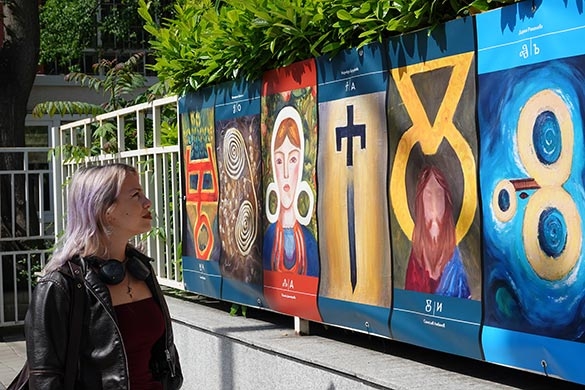
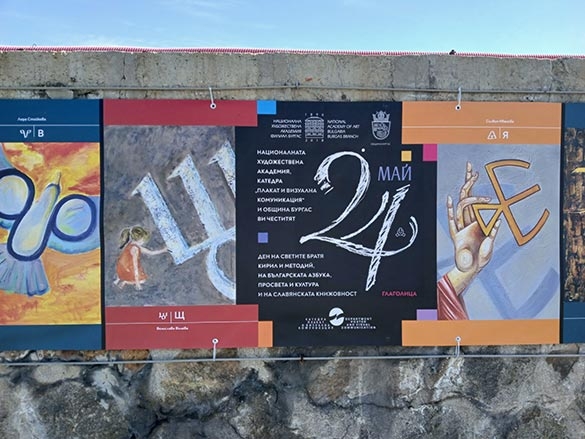
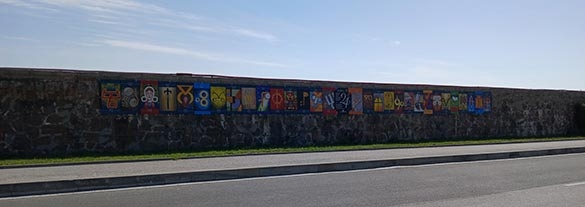
Banners on the fence of the Rectorate of the National Academy of Art in Sofia and on the wall of the Burgas Port Complex across from the ateliers of the National Academy of Art – Burgas Branch
The Glagolitic script (or Glagolitic alphabet) is a unique writing system–the first to reflect the features of the Old Bulgarian language in graphic and phonetic terms. In itself, it is not just a set of signs, but has a deep philosophical, educational and aesthetic meaning. Recently, the interest in it has been rapidly increasing, and that is no coincidence, as it is closely related to the cultural processes taking place in our present time. Taking all this into account, the multi-layered structure of the Glagolitic characters is recreated by the students through the expressive means of painting, as a moment of revelation, of personal perception of each letter, of numerous associations, emotions and an individual message to the viewer. The various historical forms of the Glagolitic script, as well as the extensive study of this issue–the research work of our eminent Prof. Vassil Yonchev, PhD, and the conclusions drawn by him–are the basis which young artists use to create their painting works.
Participants in the project are students pursuing the Bachelor's degree programme at the Department of Poster and Visual Communication – 2nd and 3rd year of studies at the National Academy of Art in Sofia and 3rd year at the Burgas Branch. The project is managed by Prof. Christina Borissova, PhD, Assoc. Prof. Stoyan Dechev, PhD, and Assoc. Prof. Lyubomil Draganov, PhD.
* The traditional initiative of teachers and students from the Department of Poster and Visual Communication to organise exhibitions on the occasion of 24th May has a thirty-year history – without interruption! Initiated at the end of the last century by Prof. Dimitar Trendafilov (Prof. Yonchev's assistant), it has been steadily continued over the past 20 years by his successor–Prof. Christina Borissova, PhD.
Gallery